




How to check if a female threaded flange meets the standards?
 Dec 17, 2025|
 In the world of industrial piping and connections, female threaded flanges are integral components. As a female threaded flange supplier, ensuring that our products meet industry standards is paramount. This not only guarantees the safety and reliability of our customers' projects but also upholds our reputation for quality. In this blog, we will delve into the comprehensive process of checking if a female threaded flange meets the established standards.
Understanding the Standards
The first step in checking a female threaded flange is to have a clear understanding of the relevant standards. Different regions and industries may have specific requirements, but some of the most widely recognized standards include the American Society of Mechanical Engineers (ASME) B16.5 and the International Organization for Standardization (ISO) flange standards.
ASME B16.5 covers pipe flanges and flanged fittings from NPS 1/2 through NPS 24 in pressure - temperature ratings, materials, dimensions, tolerances, marking, testing, and methods of designating threaded connections. ISO standards, on the other hand, provide a global framework for flange design and performance, ensuring compatibility across international projects. Familiarizing ourselves with these standards allows us to set the bar for our product quality.
Visual Inspection
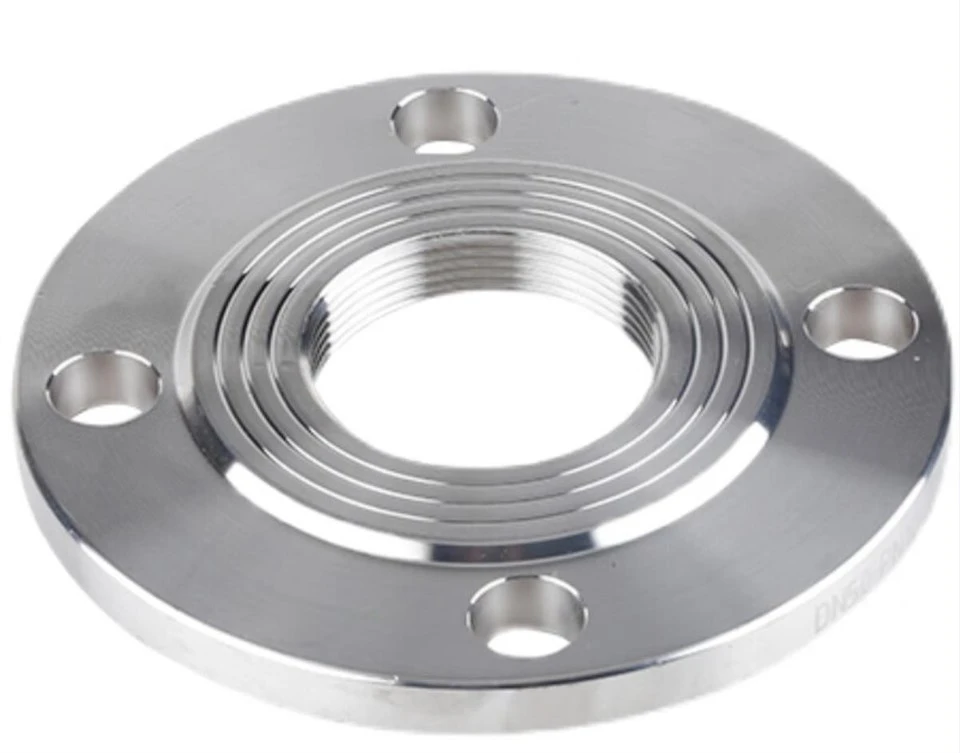
Visual inspection is the initial and most straightforward method of checking a female threaded flange. A high - quality flange should have a smooth surface finish. Any signs of cracks, porosity, or unevenness can be indicative of manufacturing defects. Cracks can compromise the structural integrity of the flange, leading to potential leaks or failures under pressure.
The flange's overall shape should be uniform, with no signs of deformation. The outer diameter and thickness should match the specified dimensions in the standard. Additionally, the flange face should be flat and free from scratches or gouges. A damaged flange face can prevent a proper seal when connected to other components in the piping system.
Thread Inspection
The threads on a female threaded flange are crucial for a proper connection. The thread pitch, diameter, and form must adhere to the standard. One of the most common tools for thread inspection is the thread gauge. A thread gauge can quickly verify if the threads have the correct pitch and diameter.
The thread form should be sharp and well - defined. Any signs of worn or damaged threads can cause difficulties in installation and result in a loose connection. It is also important to check for the presence of debris or burrs in the threads, as these can interfere with the connection and may cause thread damage during installation.
Dimensional Inspection
Accurate dimensions are essential for a female threaded flange to fit properly into a piping system. Using precision measuring tools such as calipers, micrometers, and height gauges, we can measure the critical dimensions of the flange.
The outside diameter, bore diameter, flange thickness, and bolt hole diameter should all be within the tolerance limits specified by the relevant standard. For example, if the standard allows a tolerance of ±0.5 mm for the outside diameter, the measured value of our flange should fall within this range. Deviations from the standard dimensions can lead to installation problems and may affect the performance of the entire piping system.
Material Inspection
The material used in the manufacturing of a female threaded flange plays a significant role in its performance. Different applications may require different materials, such as carbon steel, stainless steel, or alloy steel.
We need to verify the material composition through various methods. One common approach is to use a spectrometer, which can accurately determine the elemental composition of the material. The material should meet the chemical composition requirements specified in the standard. For instance, if the standard requires a certain percentage of chromium in stainless steel flanges, the spectrometer can confirm if the material meets this criterion.
In addition to chemical composition, the material's mechanical properties, such as tensile strength, yield strength, and hardness, should also be tested. These properties can be determined through laboratory testing, such as tensile tests and hardness tests.
Pressure Testing
Pressure testing is a crucial step in ensuring that a female threaded flange meets the standards. This test simulates the actual operating conditions of the flange in a piping system.
There are two main types of pressure tests: hydrostatic testing and pneumatic testing. Hydrostatic testing involves filling the flange with a liquid, usually water, and applying a specified pressure for a certain period. The pressure is typically higher than the normal operating pressure to ensure the flange can withstand extreme conditions.
Pneumatic testing, on the other hand, uses a gas, such as air or nitrogen, to apply pressure. This type of testing is more sensitive and can detect smaller leaks. However, it also poses a greater safety risk compared to hydrostatic testing. During the pressure test, the flange should not show any signs of leakage or deformation.

Marking and Documentation
Proper marking and documentation are also important aspects of ensuring that a female threaded flange meets the standards. The flange should be clearly marked with information such as the standard it complies with, the material grade, the pressure rating, and the manufacturer's logo. This information helps customers identify the flange and ensures traceability.
In addition to marking, we should provide detailed documentation for each flange, including material test reports, inspection reports, and pressure test reports. These documents provide evidence that the flange has been manufactured and tested according to the relevant standards.
Industry - Specific Flange Types
In our product range, we offer various types of female threaded flanges, each designed for specific applications. For example, the Threaded Blind Flange is used to close the end of a pipe. It is important to ensure that these specialized flanges also meet the relevant standards.
The Forged Threaded Reducing Flange is used to connect pipes of different diameters. Its unique design requires specific dimensional and material considerations to ensure it performs effectively. The Flat Face Threaded Flange is commonly used in low - pressure applications, but it still needs to meet the necessary standards to ensure a reliable connection.
Conclusion
As a female threaded flange supplier, we take the responsibility of providing high - quality products seriously. Checking if a female threaded flange meets the standards involves a comprehensive process, from visual inspection to pressure testing and documentation. By adhering to the relevant standards and conducting thorough inspections, we can ensure that our flanges are safe, reliable, and suitable for a wide range of industrial applications.
If you are in the market for female threaded flanges and are looking for a supplier that prioritizes quality and compliance with standards, we encourage you to contact us. We are ready to discuss your specific requirements and provide you with the best solutions for your projects. Let's start a conversation about how we can meet your flange needs.
References
- ASME B16.5 Standard for Pipe Flanges and Flanged Fittings
- ISO Flange Standards
- Manufacturer's Guides for Flange Inspection and Testing Tools