




What is the Poisson's ratio of a blind flange plate?
 Oct 23, 2025|
 Hey there! As a supplier of Blind Flange Plates, I often get asked a bunch of technical questions. One query that pops up quite a bit is about the Poisson's ratio of a blind flange plate. So, let's dive right into it and break down what this Poisson's ratio is all about and how it relates to our blind flange plates.
First off, what's Poisson's ratio? In simple terms, it's a measure of how a material behaves when it's stretched or compressed. When you pull on a material, it not only gets longer in the direction you're pulling (the axial direction), but it also gets thinner in the directions perpendicular to the pull. Poisson's ratio is the ratio of the transverse strain (the change in thickness) to the axial strain (the change in length). It's denoted by the Greek letter nu (ν).
For most materials, Poisson's ratio ranges from 0 to 0.5. A value of 0 means the material doesn't change its thickness at all when stretched or compressed. On the other hand, a value of 0.5 would imply that the volume of the material remains constant during deformation.
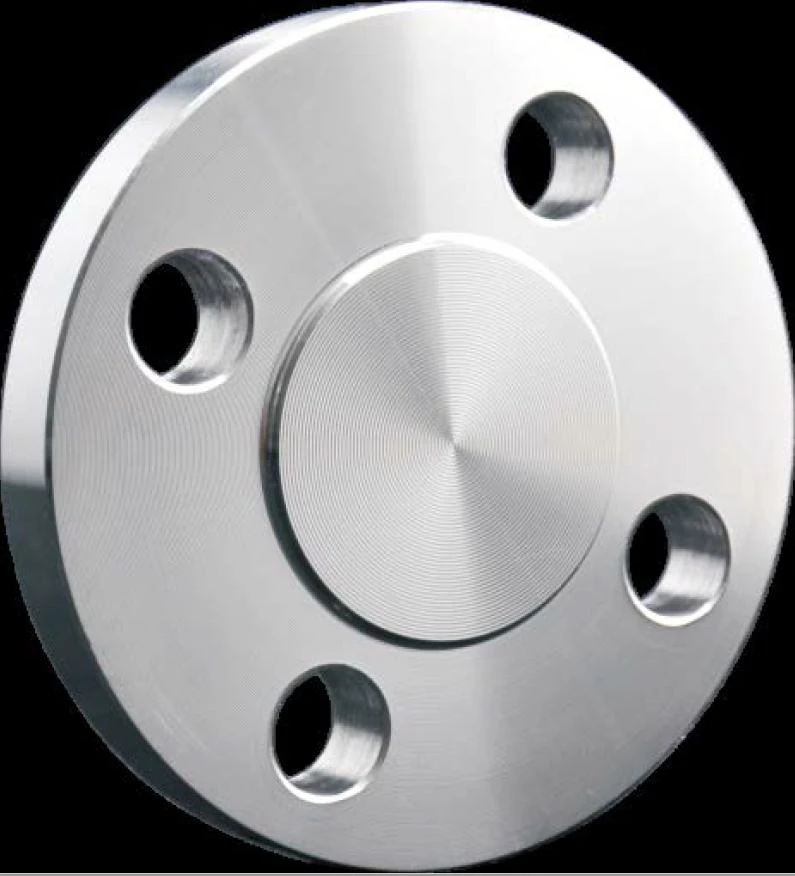

Now, let's talk about blind flange plates. These are used to seal the end of a piping system, preventing the flow of fluid or gas. They're crucial components in many industrial applications, from oil and gas to water treatment plants.
The Poisson's ratio of a blind flange plate depends on the material it's made from. We offer a variety of materials for our blind flange plates, including carbon steel, stainless steel, and threaded flange plates.
Carbon steel is a popular choice for many applications because it's strong, durable, and relatively inexpensive. You can check out our Carbon Steel Plate Flange options on our website. The Poisson's ratio of carbon steel typically ranges from about 0.27 to 0.30. This means that when you stretch a carbon steel blind flange plate, it'll thin out a bit in the transverse directions, but not too much.
Stainless steel is another excellent option, especially in environments where corrosion resistance is important. Our Stainless Steel Plate Flanges are made from high-quality stainless steel alloys that offer great performance. The Poisson's ratio of stainless steel is usually around 0.30. So, it behaves quite similarly to carbon steel in terms of how it deforms under stress.
Threaded flange plates are useful when you need a quick and easy way to connect pipes. You can find more about our Threaded Flange Plate products on our site. The Poisson's ratio of the materials used for threaded flange plates also falls within the typical range for metals, around 0.25 - 0.35.
Why does the Poisson's ratio matter for blind flange plates? Well, it has implications for how the plate will perform under different loads. When a blind flange plate is installed in a piping system, it'll be subjected to internal pressure, external forces, and temperature changes. The Poisson's ratio affects how the plate will deform in response to these loads.
For example, if the Poisson's ratio is too high, the plate might thin out too much under pressure, which could lead to cracking or failure. On the other hand, if it's too low, the plate might not be able to adapt well to changes in shape, causing stress concentrations and potential damage.
Engineers and designers need to take the Poisson's ratio into account when selecting the right blind flange plate for a specific application. They'll consider factors like the operating pressure, temperature, and the type of fluid or gas being transported. By choosing a plate with the appropriate Poisson's ratio, they can ensure the long-term reliability and safety of the piping system.
As a supplier, we understand the importance of providing high-quality blind flange plates that meet the specific needs of our customers. That's why we offer a wide range of materials and sizes to choose from. Whether you're working on a small-scale project or a large industrial installation, we've got you covered.
If you're in the market for blind flange plates, or if you have any questions about Poisson's ratio or our products, don't hesitate to reach out to us. We're here to help you find the perfect solution for your project. Just contact us for a quote and let's start the procurement process. We're confident that you'll be satisfied with our products and services.
In conclusion, the Poisson's ratio of a blind flange plate is an important property that affects its performance under load. By understanding this concept and choosing the right material, you can ensure the safety and reliability of your piping system. So, if you're looking for top-notch blind flange plates, give us a shout, and we'll work together to get the job done right.
References
- Callister, W. D., & Rethwisch, D. G. (2016). Materials Science and Engineering: An Introduction. Wiley.
- ASME Boiler and Pressure Vessel Code, Section VIII, Division 1.